
"It's not our first rodeo": Hannah Lim and Zachary Lagha on starting over, together
The new Canadian ice dance team sat down with mskating.com for their first interview since teaming up — on what stopped working before, the season they've chosen to spend at home, and the programs they're building from scratch.
Canadian ice dance came out of the Milan-Cortina Olympic cycle looking like a shuffled deck. Longtime partnerships ended within weeks of one another, veterans stepped away, and by early summer the Ice Academy of Montreal had four brand-new teams learning each other's timing on the same ice.
One of those teams is Hannah Lim and Zachary Lagha. Lim, born in Toronto to Korean parents, spent the last cycle representing South Korea with Ye Quan — a partnership that produced a World Junior silver and an Olympic appearance in Milan before the two split in April. Lagha spent fifteen years with Marjorie Lajoie, competing at two Olympic Games for Canada, before their partnership ended this spring. He picked up the phone, she picked up the idea, and by June the two had announced they'd be skating together for Canada.
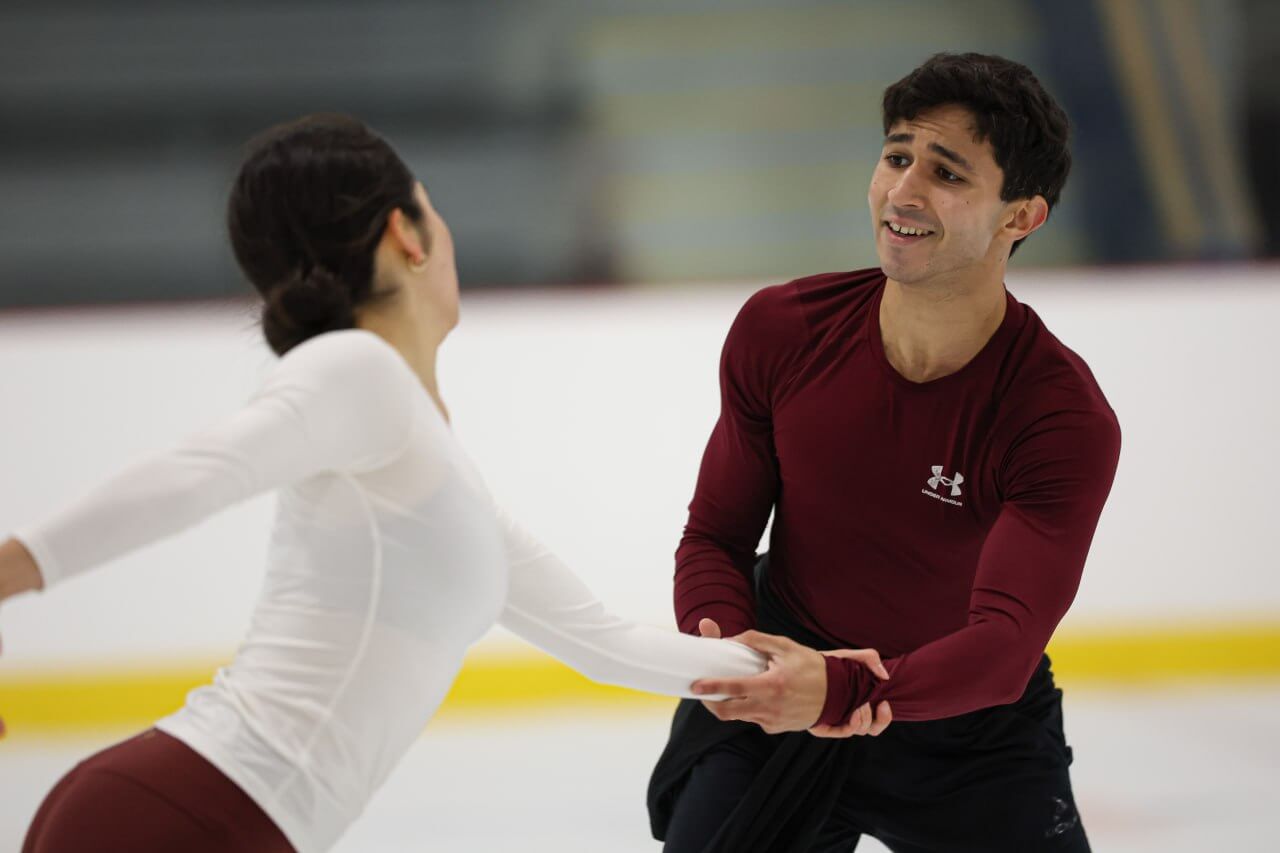
Because of Lim's transfer from the Korean federation, the pair can't compete internationally this season — a full year at home while their training mates fly off to Grand Prix events and other international championships. Their competitive debut comes at the Quebec Summer Championships in August, where they'll skate their rhythm dance — a deliberately classical take on this season's Golden Waltz. Their free dance, from Marie-France Dubreuil, waits until the fall. I caught them on the day before Skate Canada's official media day, so we had plenty of time for an unhurried, sit-down conversation: about what wasn't working before, the plan ahead, and the programs they're putting together.
From training mates to partners
How long have you known each other? Hannah, how different is Zach from the outside perception?
Hannah: Since 2019, when I moved to the I.Am. We used to talk quite a bit and he was very friendly with me, but from the outside people have this perception that he's a bit cold. Funny but I was kind of scared of him, actually, and I never really approached him for my first three years. Then it got better, we became friends, and now we're partners.
How hard was it to drag Zach into filming Instagram Reels? He never seemed like much of a social media person.
Hannah: He's not too bad, haha. I say "can we do this?" and he says "okay." Not hard.
Zachary: Actually, I'm having a lot of fun with it.
Zach, does Hannah make you laugh?
Zachary: Oh, yeah. She's funny — funny reflexes sometimes, and funny lines too. So far it's been pretty easygoing. I can take the wheel and relax, and other times she takes the wheel.
Hannah: At training we definitely laugh, but when we need to be serious, we're serious. It's a good balance — we know when to lock in, and when we're figuring something out it's kind of funny that we can laugh about it. We work in such a similar way that we can rely on each other.
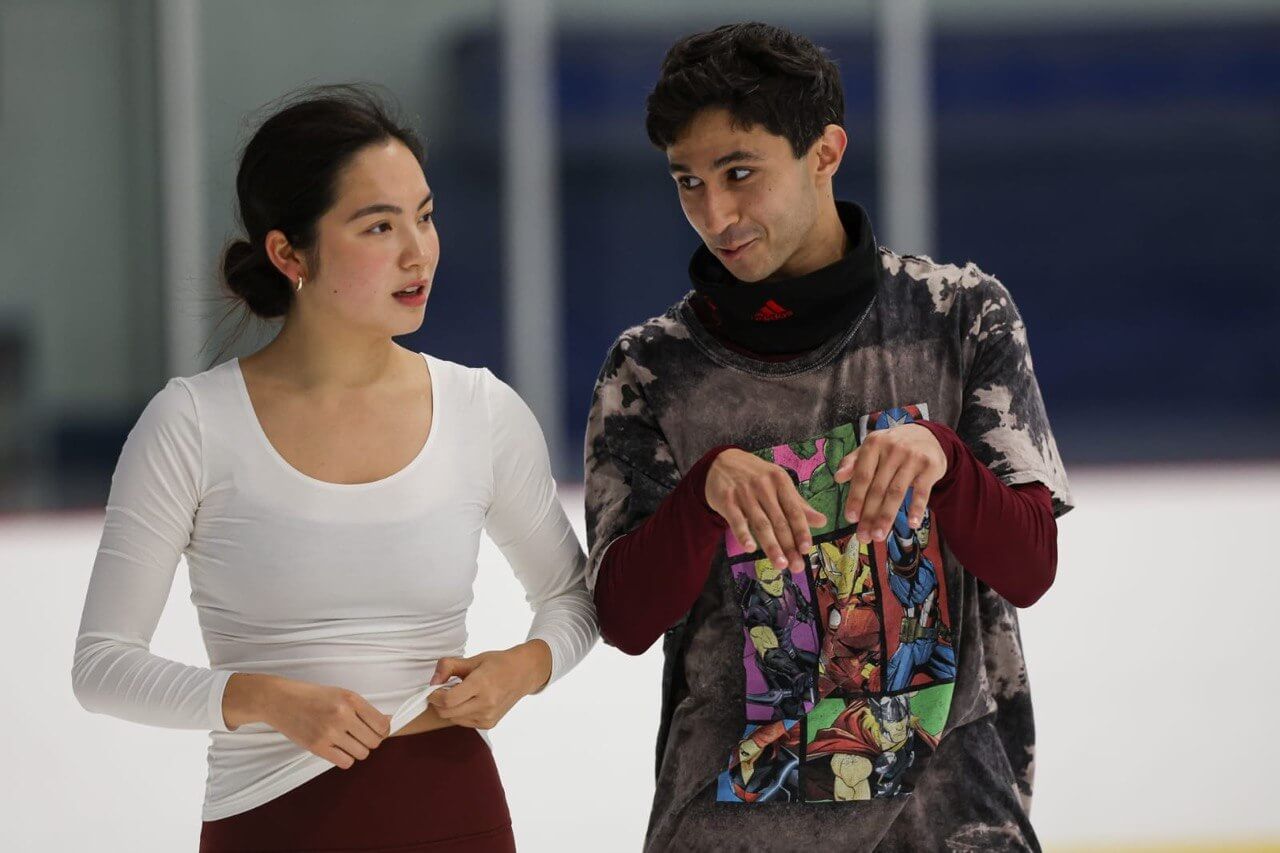
Could this still be the honeymoon phase? Are you ready for something to not go the way you planned?
Hannah: I think so. We both know — same as a lot of the other new teams here — that we're in the honeymoon phase, where everything feels fun and new. Like any relationship, things will eventually become more routine. But even then, I'm excited to see what we do. There will inevitably be bumps, but I think we can face them together.
Zachary: It's not our first rodeo.
How the partnership happened
So how did it actually happen? Whose idea was it, and who approached whom?
Zachary: I gave her a call. I was giving the signals.
Hannah: That's what happened. After Worlds I'd split with Ye — it wasn't official online yet, but within the school everyone knew. Some time passed, and then Zach asked if he could call me. We talked about Worlds, about where his head was at and where mine was. He initiated the call, but I was the one who asked the question. I had a feeling, but I wasn't sure about the situation between him and Marjorie. So I wasn't going to get my hopes up, I'd just see what he wanted. But it sounded like he wanted to skate together, so I asked him: "Do you want to try skating together?"
Why each other?
Hannah: I've always admired him in training. We were training mates first, and I admired his work ethic a lot. We work very similarly, and I really loved his skating. I thought we'd naturally go well together, right from the beginning. And when we started discussing music it was so easy — I never hit a block. We kept suggesting things and liking the same stuff. The first time we skated together, it was just so easy.
Zachary: Because I love the way she skates, and I think she's the most talented girl in the field right now. I knew we had similar taste in music and style. For me it was the obvious fit.
Did you have other tryouts?
Hannah: Yeah — with Paul Ayer and a few other guys. But it was Zach, no hesitation. The first ballet class we did together felt really natural, and it was really fun. We did improv together and it went smoothly. I thought, "this is so easy." Within the first week or two it just felt normal to skate with him.
Zachary: The first run-through was so nice too. Everything worked the first time, and I thought, "if that's the first time, imagine two or three years from now." The adaptation was maybe a week — "okay, you do this that way" — and then it felt normal.
What wasn't working
These changes came at the very end of an Olympic cycle. What made each of you feel you needed a change?
Hannah: Last season was big, especially for me — my first Olympic season. A lot of excitement, a lot of fun. But Four Continents was hard, and getting to the Games was hard. Then at the Olympics we didn't make the free dance, and that was the catalyst. I was in the stands watching the free dance thinking, "I should be there. I want to be there so bad." Not even just making the free — I want to be up there by the next Olympics, in the last groups, competing at that level. Sitting there, my heart was hurting.
And you had that talk with Ye before Worlds?
Hannah: Before Worlds. I told him my whole thought process since the Games. I wear my emotions on my sleeve — you can tell exactly what I'm feeling. Training after the Olympics was difficult for both of us, and he could tell something was off. We'd been together so long that I could read him, and I could tell he knew what was coming. Every time we came to skate it was this big elephant in the room — we'd dance around it but never say it. And I hate training like that, because there were never any lies between us. So I told him everything. We took a week off, and after that he came back and said he wanted to do Worlds as a last hurrah — a celebration of our whole career. That's why I was so emotional there. I'll always be grateful he chose to do it.
How's he doing? Might we see him on the ice again?
Hannah: Yes, he'll be back, that's for sure. He's still training, he hasn't stopped. I think we might get some news from him soon.
Zach, your story. When did things stop going the way you planned?
Zachary: Worlds in Boston didn't go the way Marjorie and I wanted — the first time in a while our results were lower than our goals. Back then I thought, "maybe it's just a bump — one competition, keep going." Then the Olympic season started very well, so everything was fine. But again, at the Games and at Worlds — the big competitions — we didn't get the results we both wanted. So I started putting everything in perspective and seeing what was missing. Our development wasn't going well — we came up with the same kind of elements every year, and every time we tried to develop new ones, we'd push hard and then go back to what we had before. At some point you're out of breath. Maybe our team was a little out of breath, and maybe I'd reached my max with Marjorie and she'd reached hers with me. We're very different people, which is great for work but can be an issue for artistic choices. Maybe it was a chance for both of us to try something new — a new approach, because we've only known one approach our whole career.
Hannah: When you want to switch partners, it's because you feel there's a block you can't get past — the way you work, or skill-wise, or artistically. You feel that block, you see everyone else surpassing you, and you feel you're at the max you can achieve together.
Romain Haguenauer mentioned you even considered switching schools.
Zachary: Yes, it was on my mind. I won't go into details — but yes, I considered it.
Why did you stay?
Zachary: My whole life is in Montreal — my physio, my family, everything. But the real reason is that the school works, and it's a good school. There's a difference between saying "the coach is bad" and "the dynamic doesn't work." It wasn't a problem with the school; the dynamic Marjorie and I had reached an impasse.
Hannah, would you have considered changing coaches?
Hannah: There was a moment when Zach brought it up, and I never close myself off to an idea. I talked to my parents and they said, "do whatever you need for your career," like they always have. I'd already moved away from home, so I figured I could go anywhere. But we talked about it more, together, and came to the same conclusion: Montreal is the best school. It's where we like to be and where we can progress.
Zachary: It's home.
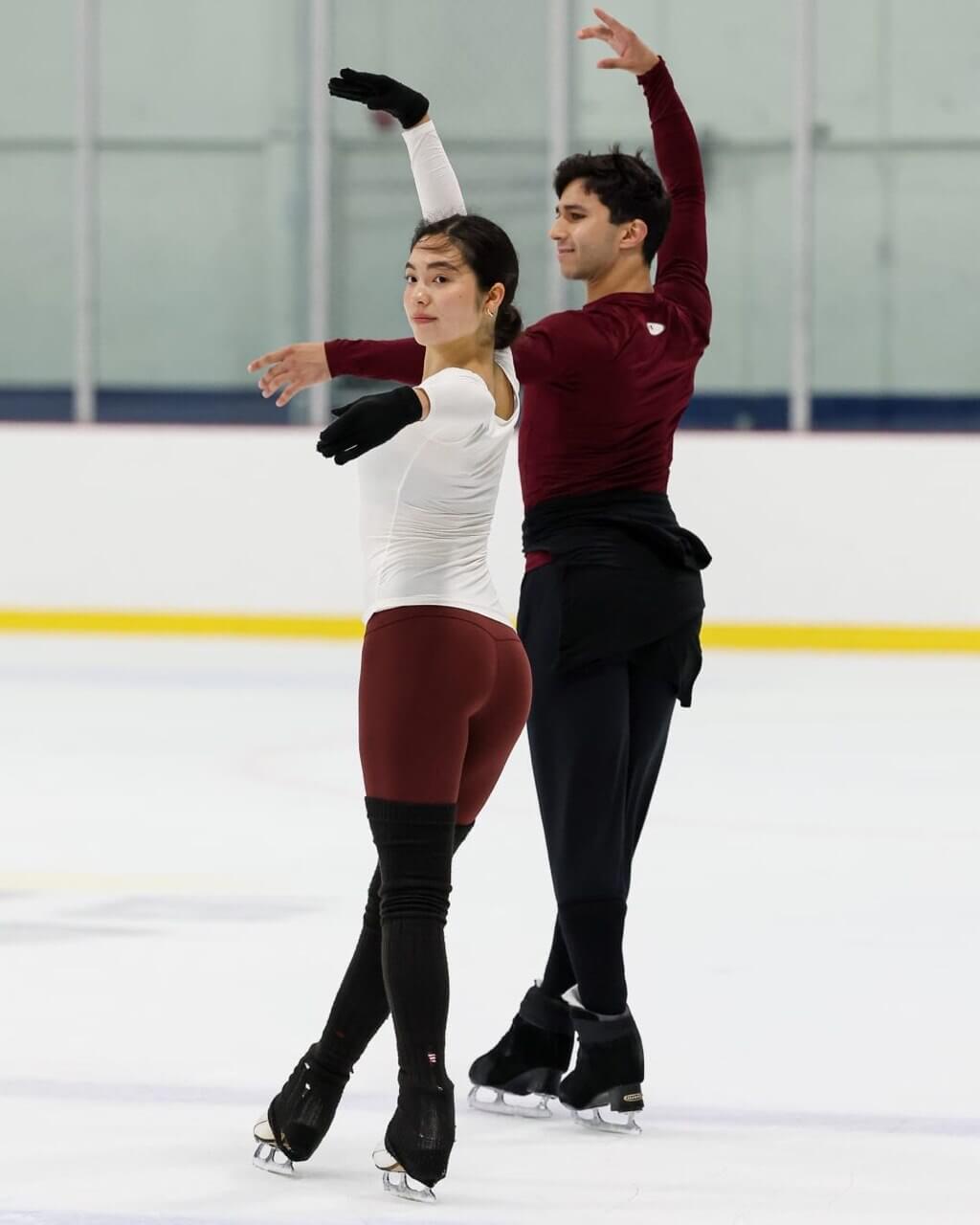
The reactions
How did family and friends react? Zach, what did your best friend Anthony Ponomarenko say?
Zachary: For Anthony, results matter, but the most important thing is happiness. He told me, "if you're happy, then God bless you — that's what matters most." That's what everybody told me: if it makes you happy, go for it.
Hannah: My family was so supportive — every step of the way, through the split, through finding a new partner, then finding Zach. And my friends, especially the ones who skate, said the same thing Zach's did: "if that's what makes you happy, I support you 100%."
And the coaches?
Hannah: The coaches here never force anything on you. Their main thing was, "take some time to think about it." They didn't want us to rush. They said, "whatever you decide, we support you — we'll always be your coaches."
Lessons from the past
What did you learn from your former partnerships that still helps you?
Hannah: Ye was such a good and caring partner. When I was younger I wasn't the most caring partner myself — out of ignorance, really; I was so young I didn't know what I was doing. Then, starting our last junior season and first senior season, I learned from him how to take care of your partner, how to perform together, how to share the spotlight. He taught me those things, and I carry them through the rest of my career.
Zachary: I skated with Marjorie for about fifteen years, so we both learned to support your partner. If I was a bit grumpy in training, she knew the reason and would try to make me feel better, and I tried to do the same for her. We learned to talk to each other — in the car, in training, wherever. Toward the end we really understood where we came from and understood our differences. We both learned the importance of supporting your partner in difficult times.
Now you train on the same ice — sometimes the same group — as your former partners. Does it feel weird?
Hannah: At first it was a little awkward. You were with that partner, and now you're not, but you're still skating together — just not together. It's like seeing an ex and having to work in the same office. What makes it less awkward is time, honestly. As the days go on and you keep seeing each other, it becomes normal.
A new era at the rink
A new Olympic cycle has started and some skaters have retired. Has the atmosphere at the rink changed? Does it feel like a new era?
Zachary: The vibe changes a little every cycle. I really felt it after the Beijing Olympics — some people left, like Madison Hubbell and Zach Donohue, Gabriella Papadakis and Guillaume Cizeron. So we had more younger teams moving up from juniors. It evolves. It's like NextGen.
Hannah: It's a great atmosphere. I have a lot of friends from the school and I'm always hanging out with the girls — after training, on weekends. I'm a real social butterfly, so I enjoy our friendships.
Is it strange not having Madison Chock and Evan Bates around?
Hannah: A little bit. After the Olympics, once we understood they weren't coming back, it made us really sad — they were like mom and dad to everyone here.
Zachary: And they were good training mates who always talked to everybody. In their mind there was no hierarchy — novice, pre-novice, junior, everybody was equal to them. They treated everyone with the same love and respect. Very humble.
Hannah: They were always so welcoming — big hugs, asking how you are. You could really feel how much they cared. Madison actually made one of my costumes a season ago, and I'd love to work with her again — she has such a great vision for costumes. If she opens her own boutique, I'll be one of her first customers.
At I.AM you're friends but also competitors — same warm-up group, same podium, hopefully the same medals soon. How does that work?
Hannah: It's difficult, and it's felt harder as we've gone up. In juniors I didn't feel it at all. Now you have to disassociate the friendship from the rivalry, and that's tricky for me because I'm very much a people-and-friends person — but I also want to beat you. So it's hard in my head. With more experience, I think I'll get better at it.
Zach, Anthony is one of your closest friends and you fight for the same medals.
Zachary: I've known Anthony since we were juniors, and this competition thing is actually great, because you find out who your real friends are. When I started beating him for the first time, he didn't change at all — and I really respect that. And when he beat me in Boston, we had a drink in his room and I told him I was happy for him. He works just as hard as me — so why would I be upset? If I feel any jealousy, it's not his fault; I just have to work harder and be smarter. Same with Geoffrey Brissaud — he always told me, "I want to beat you once." And he did, at the last competition, and I was very happy for him, because he works very hard. If people work hard and persevere, I'm always going to be behind them.
You're a huge school — how come there are almost no leaks about new partnerships or program music?
Zachary: I guess people are just loyal.
Hannah: I don't know, honestly — I think about that too. We all have this confidentiality thing. If you had a new partner, I wouldn't leak it on social media, so I respect that you don't do it to me. We can put ourselves in each other's shoes — we all train together. I wouldn't want it done to me, so I won't do it to someone else. It's a great thing that we all have that respect for each other.
A season at home
Hannah, where do things stand with your release? Do you have to sit out a year?
Hannah: It's one year from my last international event, so for me that's from Worlds. Skate Canada sent the release request to the Korean Skating Union, but the process takes time.
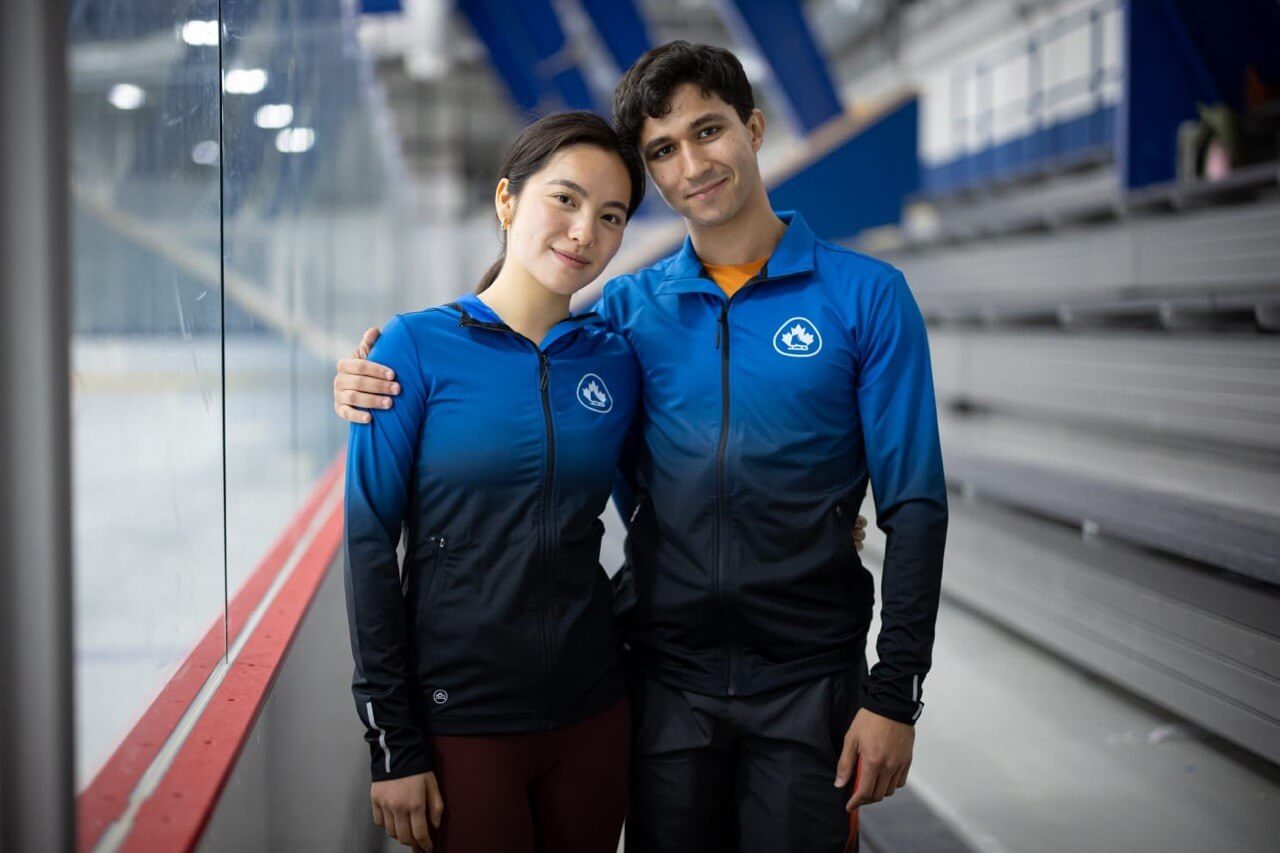
Zach, partnering with Hannah means missing a full season. How do you feel about that?
Zachary: Honestly, I don't care. That's what the coaches asked me too — "did you think about that?" And I said, "obviously I thought about it." But I'm looking at this long term. When a tryout works the way ours did, it felt like a shame not to take the opportunity. And it's nice, because we get more time to prepare for our international season — which we're going to need.
Hannah: We have a full year, so we can learn a lot about each other and our skating, and push ourselves to do cool things.
Are you ready for the frustration when other teams from your rink leave for the Grand Prix and you stay home? Does it change your training?
Hannah: Of course it's a bit frustrating. We're competitors and we like to put our dances out there. I felt it a little already — when the Grand Prix list came out, usually we'd be on it, and I was like, "oh no, I'm not there." Our friends will be leaving and we'll be staying, and I'm sure I'll feel a bit jealous. But I'll use that to work harder at home, because we'll never get a season like this again. And no, it doesn't change anything in training — we treat it as if we were competing internationally.
Zachary: It's still a very important season for us. Our goal is really on Nationals; we want to perform there. And it'll actually be nice to have a shorter season for a change — I don't remember the last time I finished my season at Nationals.
Will you watch the international events this season?
Zachary: Sure. And I'd rather do this — watch them on TV and skate with Hannah — than not skate with her and do those competitions.
Might it free up time for Zach's piano?
Zachary: Skating is the priority right now. But Hannah has suggested that at some point we could do a program to a piano piece I'll perform.
Hannah: Yeah, that would be so much fun. We were talking about how Zach could play, and we could make adjustments to the music. It makes it way more personal. One of the Chopin pieces, probably.
The plan ahead
You've obviously discussed the future. Are we talking about one Olympic cycle? Two?
Zachary: For sure we'll do one. We didn't really talk about it, but I'd be down to do two. I see us going that long, honestly.
Hannah: Me too. But let's start with one — we always reassess after every season. It's always "until the next Olympics," and then we reassess. But two cycles looks hopeful.
What's the biggest challenge for you right now? Golden Waltz?
Zachary: To be honest the Golden Waltz is a challenge for everybody, haha. But at the moment it's finding our new elements, lifts and everything. Hannah has more experience there, so I need to learn that too. Off the ice we're doing pretty much everything — a lot of ballet, a lot of lifts, and gym twice a week.
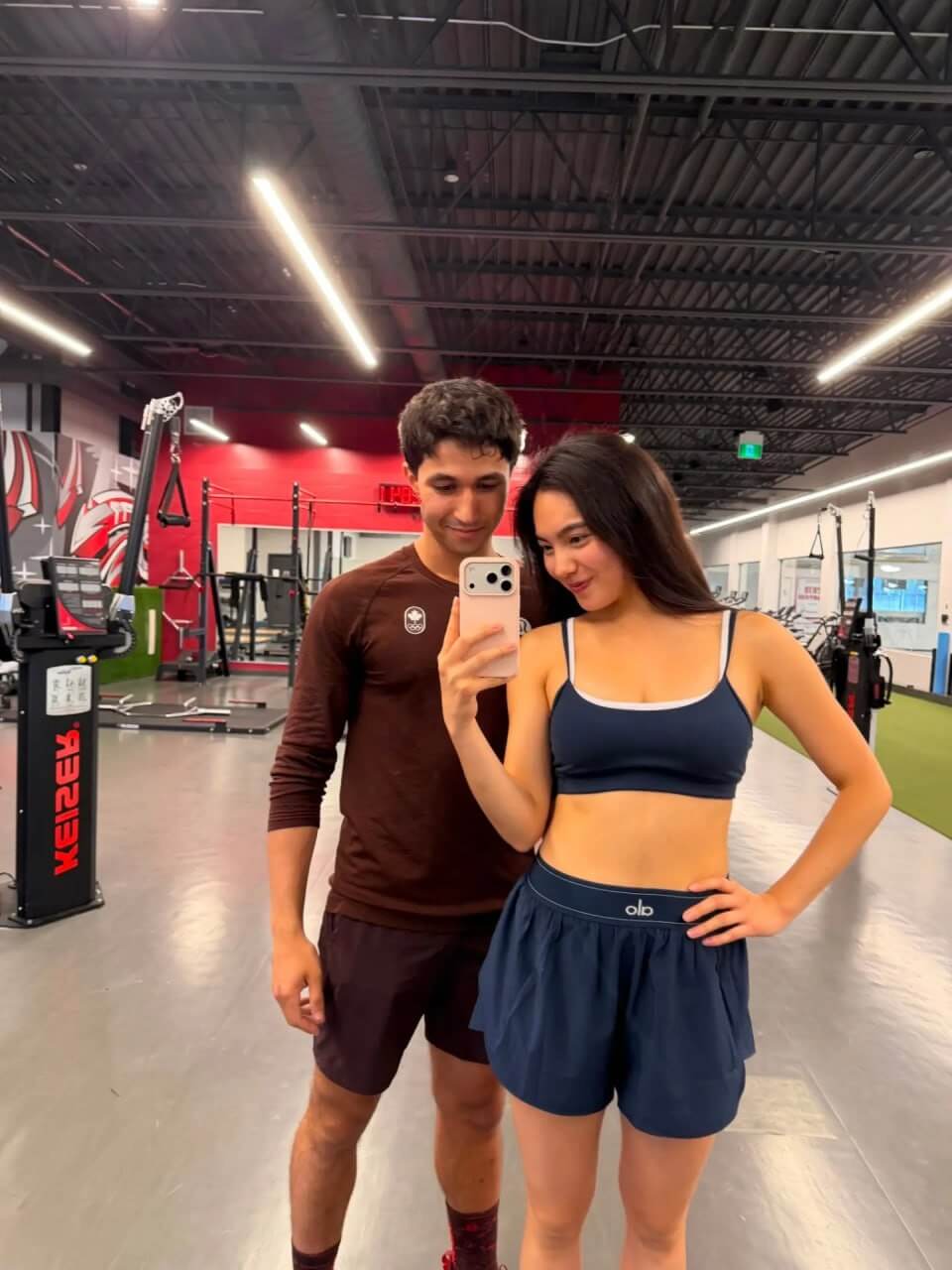
Hannah: We really understand how important it is to do things off the ice, and to do them together — not the exact same thing, but at least together. You spend more hours together, so you get to know each other better, and it's way more fun than doing it alone. The first competition will be a challenge, mostly to see who we are in competition, and under stress.
Zachary: Because you have reflexes when you're nervous, we'll have to learn to adapt to each other.
The programs
What's the first competition?
Zachary: The Quebec Summer Championships in August. It's a bit ambitious — we only have a couple of weeks. I haven't competed that early since juniors. But we're really looking forward to showing our rhythm dance.
Full package — will we see the actual RD costumes?
Zachary: We are aiming for that — probably less stones than you'll see later in the season, but we hope to show the costumes. Mathieu Caron is helping us.
Hannah, what's your least favorite part for competition — hair or makeup?
Hannah: Hair. I can never do anything cool with it, but other girls, like Madison Chock, can do something really cool — like, how did you do that? Two seasons ago, during the Cruella program, I had to use fake hair and I really didn't like it. So now I love that my hair is long again — natural and everything. Usually I don't put makeup on when I train, only if someone's coming to film or I'm going to dinner, because in competition we're already putting on so much.
What can you share about your Golden Waltz? A lot of teams are going less classical this season.
Hannah: Everyone's doing their own take — waltz and Latin, waltz and tango, waltz and jazz. We got so overwhelmed by all the themes that we thought, "what if we just do a plain, simple waltz?" We're going the more classical route, and we've really been enjoying it. It's a pretty famous waltz. Instead of "we have to do a waltz, so we're doing it," it's more like, "there it is." We're trying to showcase it. It's a good challenge, and we're going to push ourselves more.
Zachary: Hannah wanted to highlight the waltz itself rather than skate to a theme laid over it. The music we chose says to the whole world, "this is the waltz — we're not hiding anything."
Who choreographed the programs, and who's coaching you day to day?
Hannah: The rhythm dance is Romain Haguenauer and the free dance is Marie-France Dubreuil. Romain and Patch — Patrice Lauzon — are on the rhythm dance especially. Now that we're on the free dance, we're with Marie a lot. I barely saw Romain throughout my career, so it's new to see him a lot more now, and I like it — he's fun.
I also saw you working with Kaitlin Hawayek. What's she like as a coach?
Hannah: Very good. We really like her. She's very technical and thorough — she doesn't let any detail pass, and she's very specific about what she wants. You can see she has a lot of care and intention in her coaching.
Zachary: She gives a lot of little tricks and hacks, which is the sign of a good technician. But when it comes to finding new elements, she gets very creative too. I didn't know she was such a good coach. If she wants to pursue coaching, she'll be great at it.
What competitions are you doing this season?
Zachary: There's another Quebec competition in October where we'll skate both programs. After that we'll need to talk to the coaches about timing — sectionals, and then Canadian Nationals, which is our biggest event this season.
If you like the free dance, might you keep it for next year?
Zachary: I'm not a big fan of that idea, honestly.
Hannah: We really like this free dance — I think it's a really good introduction to our partnership. But keeping it for two seasons… we thought about it, I actually suggested it. But it's always fun to do something new. If there's a possibility to do the World Team Trophy next spring, we could show it there.
You'd have to score really well at Nationals for that.
Zachary: It's a little out there — but our plan is to work hard.
Last question: fans always like to make up funny nicknames for the teams. Which one would you prefer?
Zachary: I thought of "Hanza" or "Zannah," but Hannah likes "Lilak" more. The "k" is because my dad used to spell my nickname "Zak" when I was younger. Hannah has great taste, so I'll trust her here.
Hannah Lim and Zachary Lagha make their competitive debut at the Quebec Summer Championships on August 7, where they'll skate their new rhythm dance.
Photos: Antoine Saito / Skate Canada